
 深花瓣
深花瓣
样式操作模块可用于管理dom元素的样式、坐标和尺寸,本节讲解一下坐标这一块。
对于坐标来说,jquery提供了一个offset方法用于获取第一个匹配元素的坐标或者设置所有匹配元素的坐标,还有offsetparent获取最近的定位祖先元素,position用于获取获取第一个匹配元素相对于最近定位祖先元素的坐标,如下:
- offset(options) ;返回匹配元素集合中的一个元素的文档坐标,或者设置每个元素的文档坐标,;不能带单位,默认是px,有两种使用方法:
- offset() ;返回第一个匹配元素的文档坐标
- offset(val) ;设置每个匹配的元素的文档坐标
- offsetparent(options) ;获取最近的定位祖先元素
- position() ;获取第一个匹配元素相对于最近定位祖先元素的坐标 ;如果是body元素则返回{ top: 0, left: 0 }。
也就是说如果不传递参数则获取第一个匹配元素的文档坐标,如果传递了参数(含有left、top的对象),则设置每个匹配元素的坐标.
举个栗子:
writer by:大沙漠 qq:22969969
<!doctype html>
<html lang="en">
<head>
    <meta charset="utf-8">
    <title>document</title>
    <script src="http://www.51sjk.com/Upload/Articles/1/0/267/267595_20210708020326690.js"></script>
    <style>
        *{margin:0;padding:0;}
        div{margin:20px;width: 200px;height: 180px;position: relative;padding-top: 20px;background: #c38;}
        h1{margin:10px;color: #333;}
    </style>
</head>
<body>
    <div>
        <h1>123</h1>
    </div>
    <button id="b1">获取h1元素的文档坐标</button><br/>
    <button id="b2">获取h1元素最近的定位祖先元素</button><br/>
    <button id="b3">获取h1元素离最近定位祖先元素的坐标</button><br/>
    <button id="b4">设置h1元素的文档坐标</button>
    <p></p>
    <script>
        $('#b1').click(()=>{                    //获取h1元素的文档坐标
            console.log( $('h1').offset() )
        })
        $('#b2').click(()=>{                    //获取h1元素最近的定位祖先元素,也就是div元素
            console.log( $('h1').offsetparent() )
        })
        $('#b3').click(()=>{                    //获取h1元素离最近定位祖先元素的坐标,也就是相对div元素的坐标
            console.log( $('h1').position() )
        })
        $('#b4').click(()=>{                    //设置h1元素的文档坐标,相对于整个文档的
            $('h1').offset({top:'10',left:'10'})
        })
    </script>
</body>
</html>
我们添加了一个div和一个h1,另外,div设置了relation属性,div内的h1相对于div设置了margin属性,另外定义了四个按钮,分别用于获取h1的文档坐标、获取h1最近的定位组件元素、获取h1元素离最近定位祖先元素的坐标和修改h1元素的坐标,效果如下:
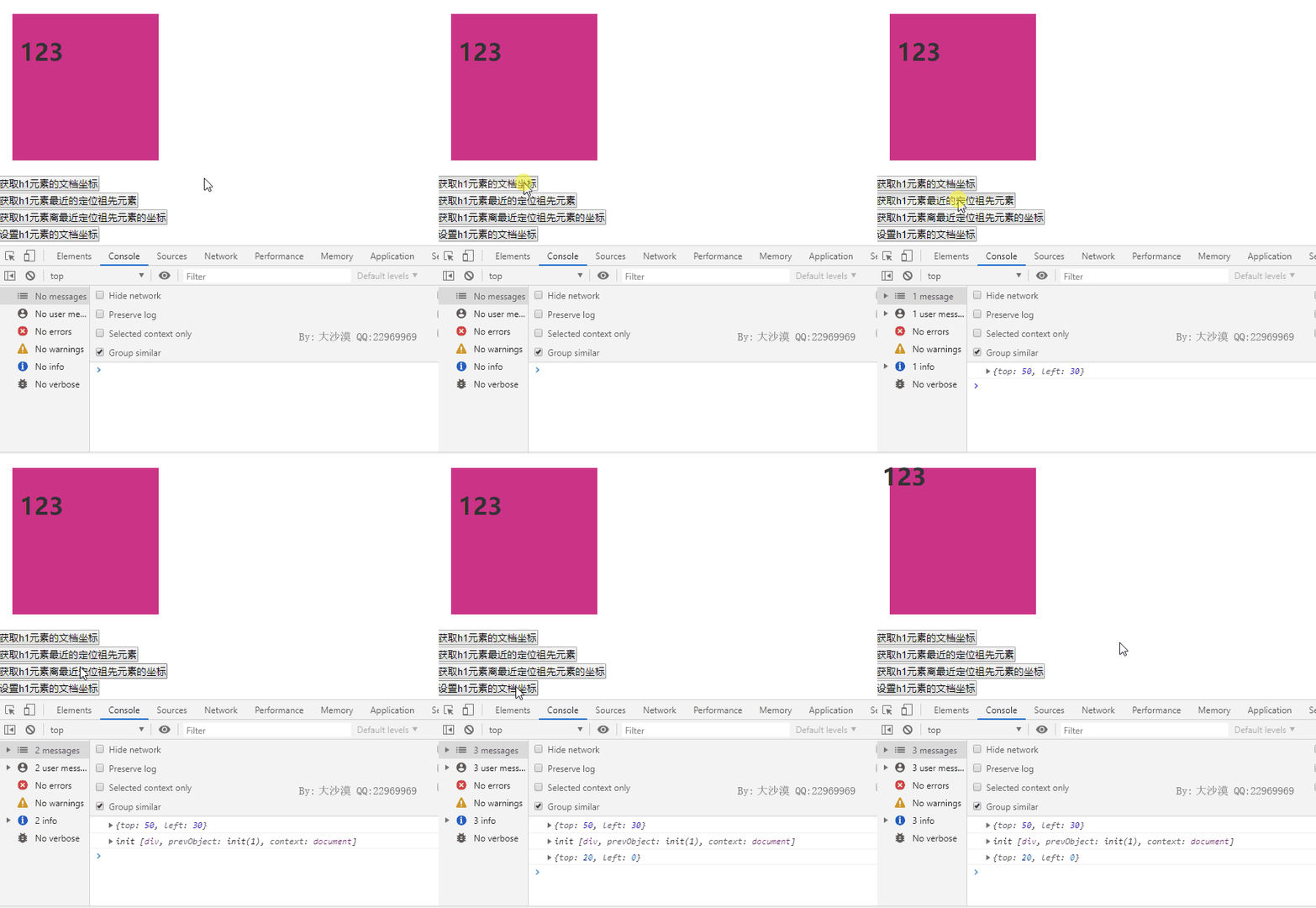
点击按钮1获取的文档坐标是相对于整个文档的,按钮2获取的定位元素也就是div元素,按钮3获取的是相对于div的偏移坐标,按钮4设置h1的文档坐标,此时h1元素上会新增一个position:relative;属性,jquery经过计算在h1上设置对应的偏移地址,如下:

源码分析
offset的实现是通过getboundingclientrect整个原生api来实现的,如下:
if ( "getboundingclientrect" in document.documentelement ) {    //原生方法getboundingclientrect()返回元素的窗口坐标,返回值含有4个整型属性:top、left、right、bottom
    jquery.fn.offset = function( options ) {
        var elem = this[0], box;                                    //elem指向第一个匹配元素

        if ( options ) {                                            //如果传入了options参数
            return this.each(function( i ) {                            //则遍历匹配元素集合
                jquery.offset.setoffset( this, options, i );                //并在每个元素上调用jquery.offset.setoffset(elem,options,i)设置文档坐标。
            });
        }

        if ( !elem || !elem.ownerdocument ) {                        //如果没有匹配元素或匹配元素不在文档中,
            return null;                                                //则不做任何处理,立即返回null
        }

        if ( elem === elem.ownerdocument.body ) {                    //如果elem是body元素
            return jquery.offset.bodyoffset( elem );                    //则调用jquery.offset.bodyoffset(body)返回body元素的文档坐标
        }

        try {
            box = elem.getboundingclientrect();                        //调用原生方法getboundingclientrect()返回元素的窗口坐标,用try-catch语句来'吞掉'ie可能抛出的异常。
        } catch(e) {}

        var doc = elem.ownerdocument,                                //指向document对象
            docelem = doc.documentelement;                            //指向html元素

        // make sure we're not dealing with a disconnected dom node
        if ( !box || !jquery.contains( docelem, elem ) ) {
            return box ? { top: box.top, left: box.left } : { top: 0, left: 0 };
        }

        var body = doc.body,
            win = getwindow(doc),                                        //调用getwindow(doc)获取window对象
            clienttop  = docelem.clienttop  || body.clienttop  || 0,    //clienttop是html或body元素的上边框厚度
            clientleft = docelem.clientleft || body.clientleft || 0,    //clientleft是html或body元素的左边框厚度
            scrolltop  = win.pageyoffset || jquery.support.boxmodel && docelem.scrolltop  || body.scrolltop,    //滚动条的垂直偏移
            scrollleft = win.pagexoffset || jquery.support.boxmodel && docelem.scrollleft || body.scrollleft,    //滚动条的水平偏移
            top  = box.top  + scrolltop  - clienttop,                    //第一个元素的文档上坐标
            left = box.left + scrollleft - clientleft;                    //第一个元素的文档左坐标

        return { top: top, left: left };                            //返回第一个元素的文档坐标
    };

} else {                                                                //不支持原生方法getboundingclientrect()时,现在大多数浏览器已经支持了,所以这里不讨论。
}
上面是获取文档坐标的,对于设置文档坐标是通过jquery.offset.setoffset()来实现的,也就是上面标红的地方,jquery.offset.setoffset的实现如下:
jquery.offset = {
    setoffset: function( elem, options, i ) {            //设置单个元素的文档坐标。
        var position = jquery.css( elem, "position" );

        // set position first, in-case top/left are set even on static elem
        if ( position === "static" ) {                    //如果该元素的position属性等于static的
            elem.style.position = "relative";                //则修正为relative,使得设置的样式left、top能够生效。
        }

        var curelem = jquery( elem ),                    //当前元素的jquery对象
            curoffset = curelem.offset(),                //当前元素的文档坐标
            curcsstop = jquery.css( elem, "top" ),        //获取 当前元素的计算样式top,带有单位
            curcssleft = jquery.css( elem, "left" ),    //获取 当前元素的计算样式left,带有单位
            calculateposition = ( position === "absolute" || position === "fixed" ) && jquery.inarray("auto", [curcsstop, curcssleft]) > -1,    //如果当前属性样式position是absolute或fixed,并且样式left或top是auto,则设置calculateposition为true。
            props = {}, curposition = {}, curtop, curleft;

        // need to be able to calculate position if eit    her top or left is auto and position is either absolute or fixed
        if ( calculateposition ) {                        //如果calculateposition为true,修正curtop和curleft坐标。
            curposition = curelem.position();                //通过.position()获取当前元素相对于最近定位祖先元素或body元素的坐标
            curtop = curposition.top;                        //获取组件元素的top
            curleft = curposition.left;                        //获取组件的left
        } else {                                        //将curcsstop、curcssleft解析为数值,以便参与计算。
            curtop = parsefloat( curcsstop ) || 0;
            curleft = parsefloat( curcssleft ) || 0;
        }

        if ( jquery.isfunction( options ) ) {            //如果options是函数
            options = options.call( elem, i, curoffset );    //则执行该函数,取其返回值作为要设置的文档坐标。
        }

        if ( options.top != null ) {                    //计算最终的内联样式top
            props.top = ( options.top - curoffset.top ) + curtop;
        }
        if ( options.left != null ) {                    //计算最终的内联样式left
            props.left = ( options.left - curoffset.left ) + curleft;
        }

        if ( "using" in options ) {                        //如果参数options中有回调函数using,则调用
            options.using.call( elem, props );
        } else {
            curelem.css( props );                        //否则调用.css(name,value)方法设置最终的内联样式top、left。
        }
    }
};
从源码里可以看到,如果元素有设置了absolute则会获取祖先元素的的偏移,然后经过一些运算获取最后的值,最后通过css()修改样式来实现最后的定位。
对于offsetparent来说,它的实现如下:
jquery.fn.extend({
    offsetparent: function() {        //获取最近的定位祖先元素,就是css position属性被设置为relative、absolute 或 fixed 的元素,返回一个jquery对象,包含所有祖先元素。
        return this.map(function() {
            var offsetparent = this.offsetparent || document.body;        //offsetparent是最近的定位祖先元素;如果没有找到,则返回body元素。
            while ( offsetparent && (!rroot.test(offsetparent.nodename) && jquery.css(offsetparent, "position") === "static") ) {        //如果找到的祖先元素的样式position是static,则继续沿着树向上找,直到遇到body元素或html元素为止。
                offsetparent = offsetparent.offsetparent;
            }
            return offsetparent;            //返回的定位组选元素将被添加到新构造的jquery对象上。
        });
    }
})
offsetparent是原生的dom操作的api,用于获取第一个祖定位元素,所有浏览器都支持的,这里就是把它进行了一个封装而已。
position()比较简单,通过offsetparent()获取第一个祖先节点的文档坐标,然后用组件节点的top减去当前节点的top,组件节点的left减去当前节点的left,返回一个相对位置,仅此而已,代码就不贴了。
